Aircraft Brokerage Career Path: From Beginner to Professional Broker
Dec 21, 2025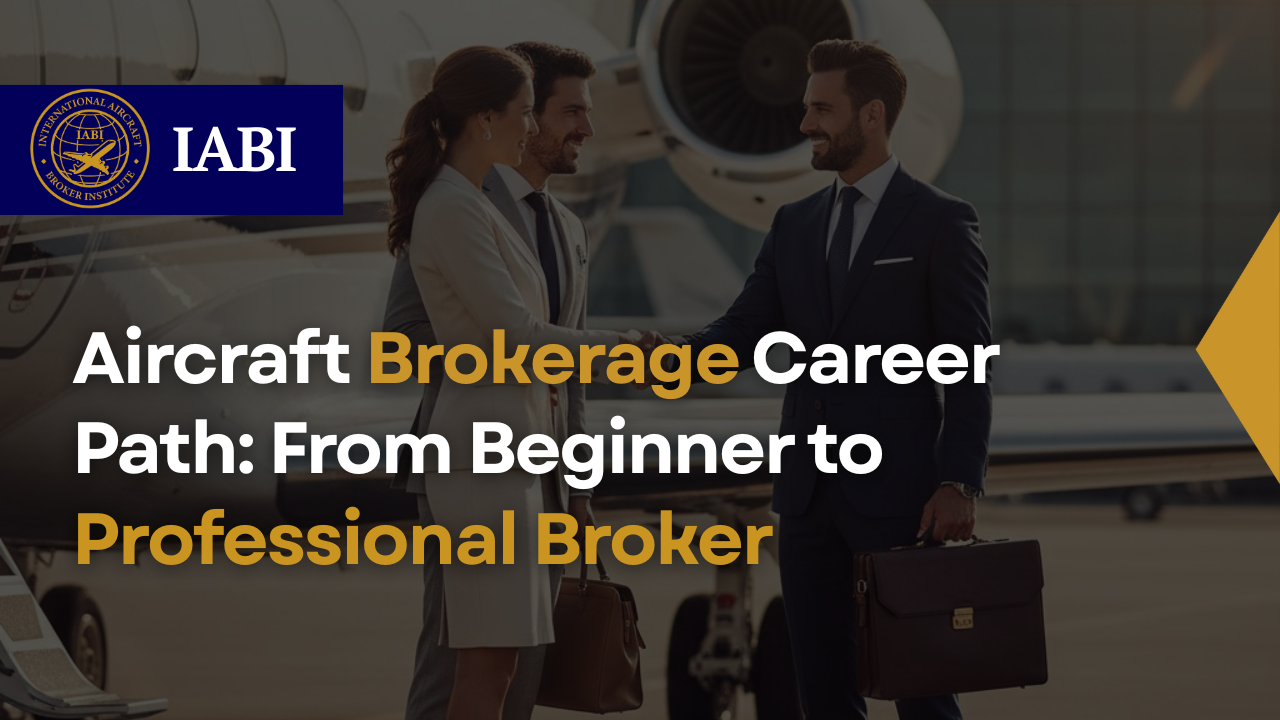
A career path in aircraft brokerage for private aviation follows a structured progression from foundational learning to independent transaction management. Understanding each stage helps aspiring aircraft brokers move forward with clarity, realistic expectations, and a long-term professional vision.
How to Become an Aircraft Broker
To become an aircraft broker in private aviation, beginners follow a structured career path that starts with professional training, continues through real transaction exposure, and develops into specialization and independent deal management over time.
What Is an Aircraft Broker?
An aircraft broker is a professional who represents buyers, sellers, and charter clients in private aviation transactions. The aircraft broker manages valuation, negotiations, inspections, contracts, and compliance to ensure informed and protected decision-making.
The Two Primary Broker Roles
Aircraft brokers work in several professional categories depending on their strengths and the services they offer. Understanding these paths helps beginners choose the right direction, gain the correct training, and align their career goals with industry opportunities.
Aircraft Sales Broker
Aircraft sales brokers specialize in representing buyers and sellers during private aviation aircraft transactions. This role focuses on valuation, negotiation, inspections, contract management, and closing processes for aircraft sales.
Learn more about Aircraft Sales Broker training
Aircraft Charter Broker
Aircraft charter brokers focus on arranging private aviation charter flights by matching client needs with available aircraft. This role involves pricing, trip coordination, operator communication, and managing charter commissions.
Explore Aircraft Charter Broker training

Stage 1 — Beginner: Learning the Foundations of Aircraft Brokerage
Every aircraft brokerage career begins with building a strong understanding of how private aviation transactions work. This stage focuses on learning before handling real clients or deals.
At the beginner stage, aircraft brokers focus on: these fundamentals form the technical and professional base required to progress safely and confidently within private aviation brokerage.
- Private aviation market fundamentals
- Aircraft valuation basics
- Transaction structure and workflow
- Introduction to aircraft broker agreements
- Overview of sales and charter transaction models
This is what a structured certification is for. Our broker certification courses cover this stage in roughly two weeks, and the masterclasses let you go deeper on individual topics.
Stage 2 — Entry-Level: Assisting in Real Private Aviation Transactions
After building foundational knowledge, the aircraft broker gains experience by supporting real private aviation transactions under supervision or within brokerage environments.
Common entry-level responsibilities include: these help the aircraft broker understand deal flow, communication standards, and transaction timelines before managing deals independently.
- Supporting private aviation market research
- Assisting with aircraft sales listings or charter quotes
- Reviewing aircraft documentation and basic records
- Observing negotiations and client communication
- Learning compliance and transaction coordination
This stage is what the six-month guaranteed internship with Certified Jets in the Complete Program is designed to provide. Our Career Hub explains how graduates are introduced to hiring brokerages and operators.
Stage 3 — Specialization: Choosing Sales or Charter Brokerage
As experience grows, aircraft brokers typically specialize in either aircraft sales or aircraft charter. Each path follows a different transaction structure and requires focused expertise.
Primary specialization paths include: choosing a specialization allows the aircraft broker to deepen technical knowledge, improve efficiency, and build authority within a specific private aviation service area.
- Aircraft Sales Broker Path – Focused on buying and selling aircraft. Longer cycles, larger commissions per transaction.
- Aircraft Charter Broker Path – Focused on charter trip coordination and pricing. Higher volume, faster first transaction.
Some brokers work both sides. If that’s your intention, the Complete Program covers both certifications for less than buying them separately.
Stage 4 — Professional: Managing Transactions Independently
At the professional stage, the aircraft broker begins managing private aviation transactions independently, applying training, experience, and market understanding to protect client interests.
Professional aircraft broker responsibilities include: these mark the transition from support roles to full transaction ownership within private aviation brokerage.
- Managing aircraft sales or charter transactions end-to-end
- Reviewing aircraft broker commission agreements
- Negotiating pricing and terms directly with clients
- Coordinating inspections and documentation — see our Aircraft Inspections Masterclass
- Ensuring FAA-compliant procedures throughout the transaction
Stage 5 — Growth: Building a Long-Term Aircraft Brokerage Career
Long-term success in private aviation brokerage depends on consistency, reputation, and relationship management rather than one-time transactions.
Key growth activities include: these help the aircraft broker transition from transactional work to a stable, referral-driven career in private aviation.
- Building long-term client relationships
- Expanding private aviation industry connections
- Improving negotiation and communication skills
- Refining market expertise
- Increasing transaction value and complexity
Brokers at this stage often work with a mentor to accelerate progress. Our coaching program pairs you with experienced brokers on live deals.
Conclusion
The aircraft brokerage career path in private aviation follows a structured progression from beginner learning to professional transaction management. By developing foundational knowledge, gaining real-world experience, choosing a specialization, and building long-term relationships, an aircraft broker can grow into a trusted industry professional.
Structured private aviation training remains the most efficient and reliable way to progress confidently through each stage of the aircraft broker career path. Compare the certification tracks or schedule a free consultation to work out where you should start.

Related reading: How to Start a Career in Aircraft Brokerage (Beginner’s Roadmap) · How Aircraft Brokers Make Money · Entry-Level Jobs in Aircraft Brokerage
FAQ
How do I get into aviation brokerage?
To get into private aviation brokerage, you begin with structured aircraft broker training that covers transactions, valuation, and contracts. After training, most beginners gain experience with an aircraft brokerage firm or charter department to apply knowledge through real private aviation deals.
Do aircraft brokers make good money?
Aircraft brokers in private aviation can earn high income through commissions, especially as transaction size and experience increase. Earnings depend on specialization, deal volume, and client relationships, with higher income potential for brokers handling aircraft sales or frequent charter transactions.
Is it hard being an aircraft broker?
Being an aircraft broker in private aviation is challenging at first due to market complexity and negotiation requirements. However, with proper training and structured experience, the role becomes process-driven, allowing brokers to manage transactions confidently and build long-term client relationships.
How much do aircraft charter brokers make?
Aircraft charter brokers earn income in private aviation through commissions on completed charter trips. Earnings depend on trip volume, pricing strategy, and repeat clients, with income increasing as brokers manage more frequent charter requests and higher-value itineraries.
Do I need aviation experience to become an aircraft broker?
No, prior aviation experience is not required to become an aircraft broker. Many professionals enter private aviation brokerage through structured training programs that teach transaction processes, market fundamentals, and client communication without requiring a technical aviation background.
Can I work independently as an aircraft broker?
Yes, aircraft brokers can work independently in private aviation after gaining proper training and transaction experience. Most beginners start within brokerage firms to learn processes before transitioning to independent operations with established knowledge and client networks.

